Jørgen Moe implies that the the phrase, “I think this is how it goes,” is an important mechanism of folklore development.
Or perhaps it’s, “Let’s see if I can remember this one…”
From his Introduction to the second edition of Norske folkeeventyr, 1852:
Still two things remain, which confirm that the folktales have been at home in our country for a very long time, even from the age of paganism. The first is the faithfulness and conscientiousness with which the best storytellers always recount the traditions – the fear they have of taking away, adding to, or even just changing the individual motif a little. This carefulness goes so far that when the story is recounted, it is told predominantly in the same words and phrases that were used the first time, certainly in the most important points and the dialogue. We find this when two people tell the story, one of whom having received it from the mouth of the other. By this conscientious accuracy we may be assured against any deliberate distortion of the original content, and this likewise suggests an instinctive respect for the folk literature’s ancient and domestic origins.
Here is a .pdf of a folktale published my Moltke Moe in 1891. No collection data has been discovered, so as far as we know, the folktale is Moe’s own composition.
Liv Bratterud from Bø herad recounting folk narratives from her repertoire for Moltke Moe, summer 1878
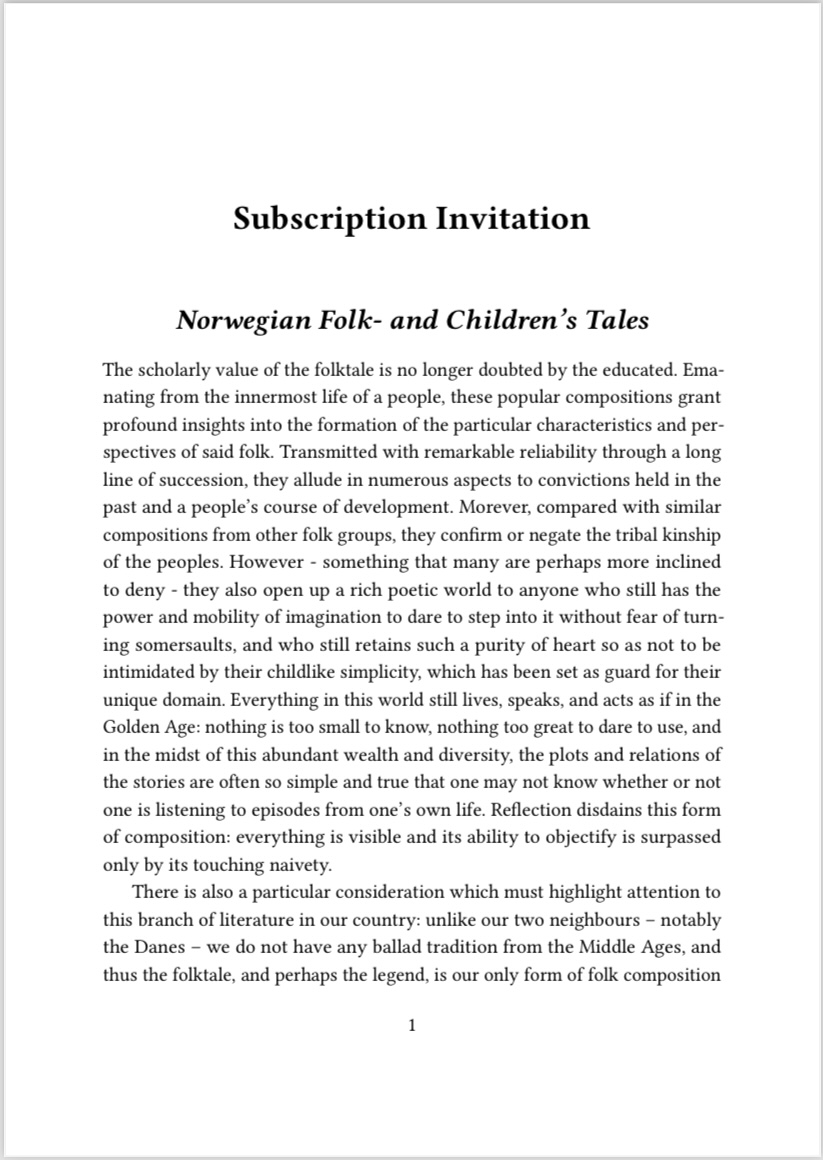
In their “Subscription Invitation,” before the initial publication of Norwegian Folktales, Asbjørnsen & Moe emphasised the urgency of their work:
Collection of these folk compositions is urgently needed at present, if it is ever to be possible. Among other things, our reawakened, newly outward-looking political life is by necessity hostile to legends and folktales. That these, which shortened many a long winter’s evening around the hearth, and many a long day behind the herds in the forest, should fall evermore silent in our mountain valleys is a fact that, while encouraging as a sign of increasing enlightenment, is certainly regrettable, if no one preserves them before they die on the lips of the folk.
– Published in Den Constitutionelle, 1840-02-23
Modern society is hostile to folklore, they claim; collection of folk narratives should therefore occur before they are lost on the tongues of their respective tradition bearers.
Beginning with Asbjørnsen & Moe in 1837, the collection of folk narratives in Norway had all but died out by 1940.
But is it not just as likely that the written publication of collected folktales and legends did away with the further need for the oral record? Why should we listen to grandma telling tales, when we can read them for ourselves in a book? Also, how can collectors working after widespread dissemination of folktales and legends in written form be sure that what they record from their informants is in fact an oral narrative rather than something the prospective informant has read in a popular book of tales?
I don’t suppose we shall ever be able to answer such questions. Whatever the case may be, though, modern society appears to be inconducive to the oral tradition of the old stories.
It's been a while since I had a weblog that served as a weblog; my old Blogger sites were places I posted my work, and little else. This site is something different, though, which brings me to the purpose of this post: what has this waning year brought, both positive and negative?
The year progressed as years often do, until June, when Wolf Thandoy (my editor) and I completed the main round of editing The Complete Norwegian Folktales and Legends of Asbjørnsen & Moe, paving the way for publication some time next year. This event came roughly twenty years after I translated my first folktale in the summer of 2003 (just to see if I could do so).
Although progress on Asbjørnsen & Moe was the most significant event, personally, the most obvious change in my sphere of activity, was the removal of my Blogger blogs, following reports of impending indiscriminate data theft in the name of “artificial intelligence” by some of the world's biggest corporations. Taking the blogs down was not a decision I took lightly, but it was an easy one. Although I had made my work in unedited form freely available for personal use, I refuse to work for Silicon Valley’s profits without explicit consent and significant remuneration.
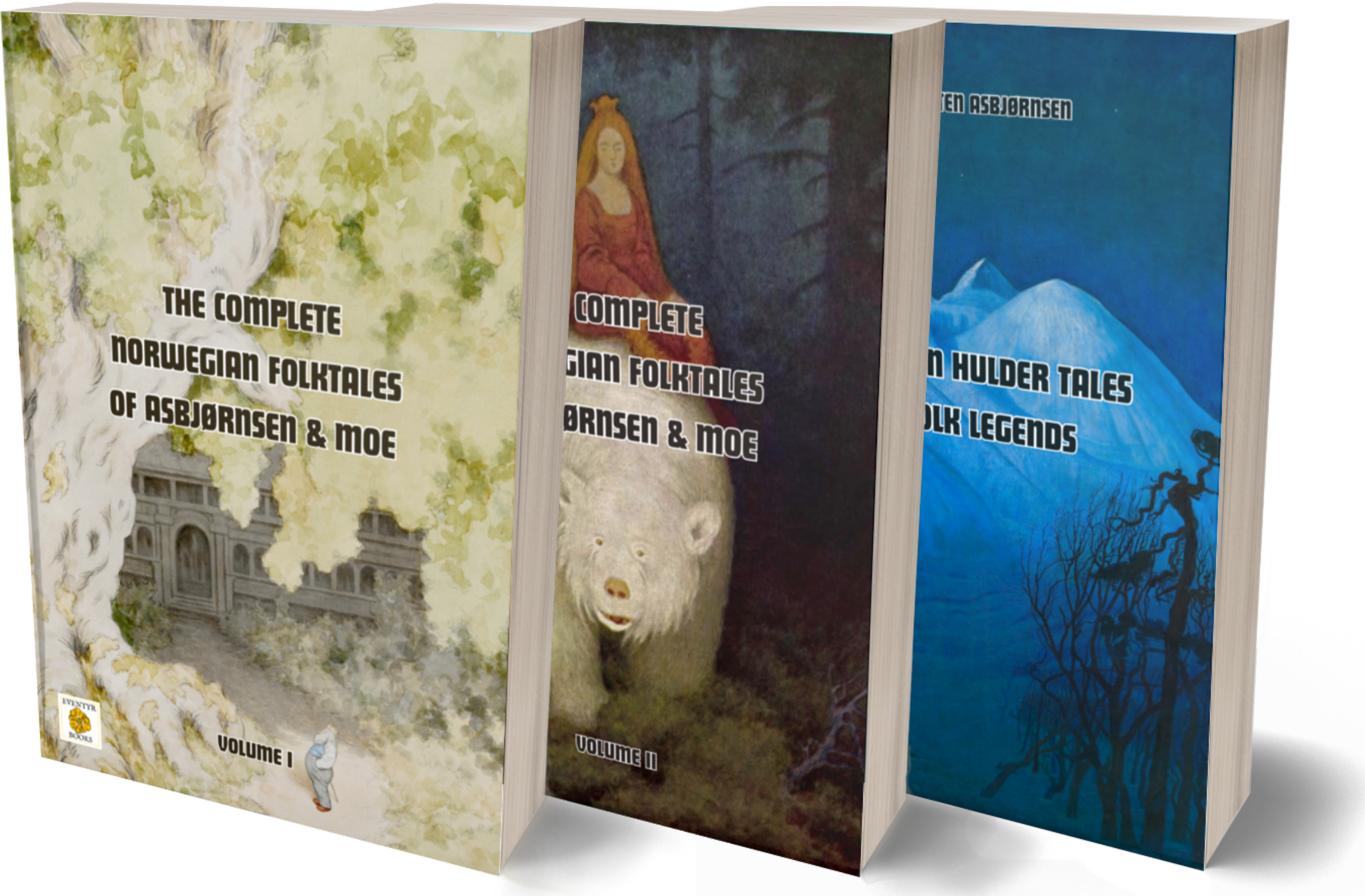
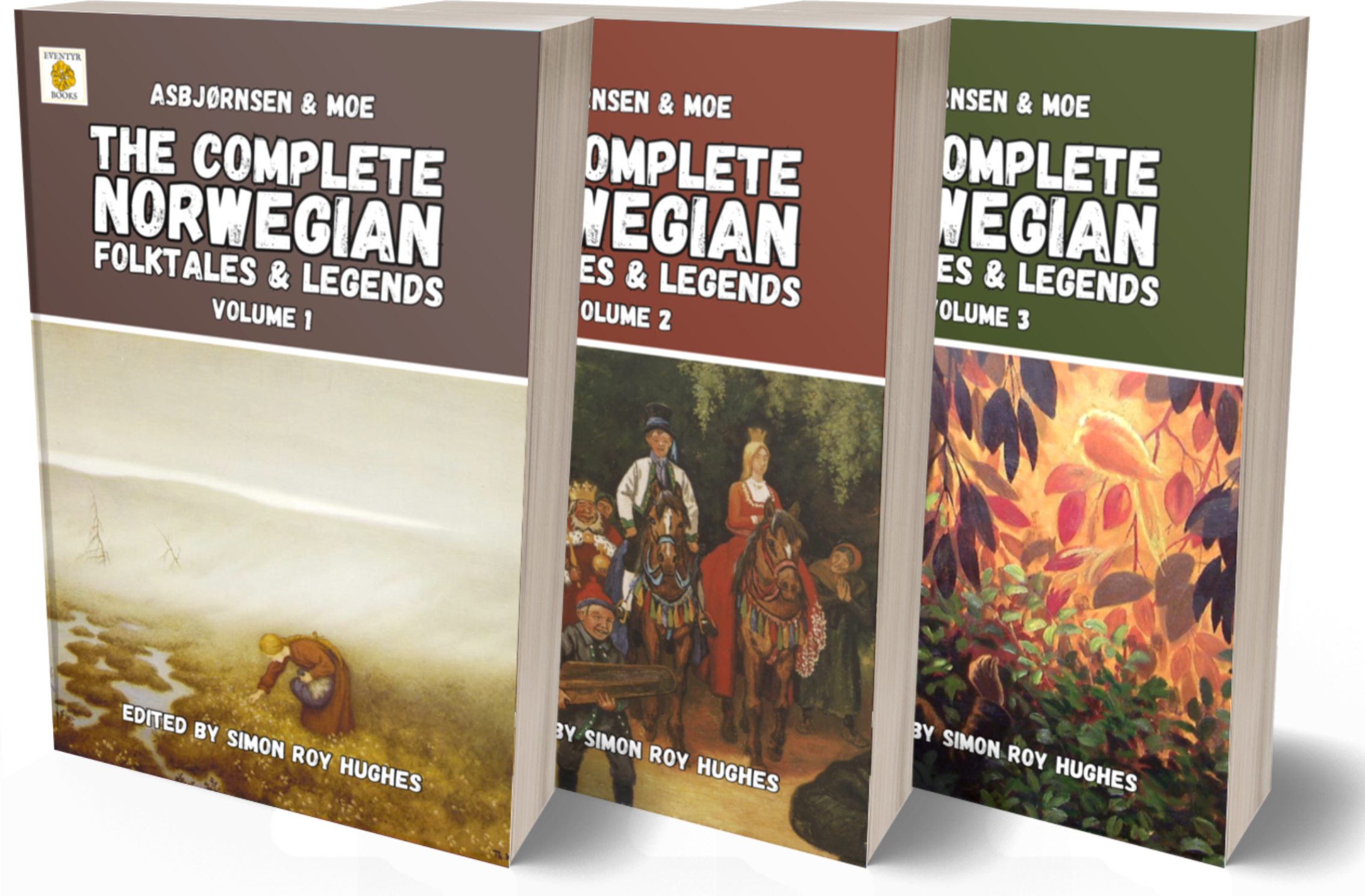
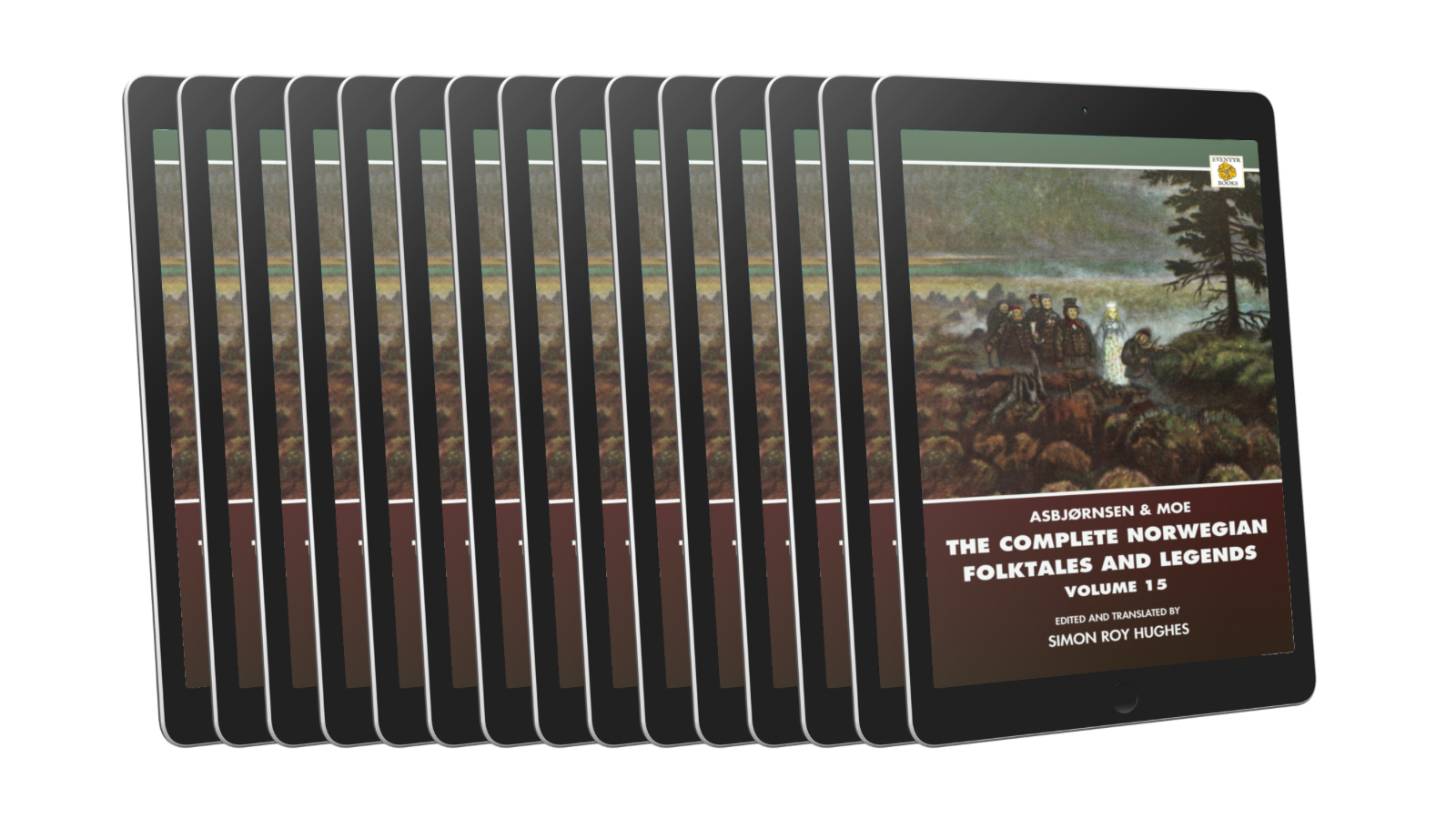
Inspired by the end of the heavy editing, and as a reaction to the shock of realising the scope of this project (i.e. the heft of the books), I developed my publishing plan in new directions. Not only will there be a complete, annotated collection in three volumes (my original plan), but there will also be a three volume editon without annotations, and a single ebook edition, also without annotations. All of these editions will be illustrated with the images that every Norwegian expects to accompany their beloved folktales and legends.
Lastly, I registered and set up this very Website, and after fiddling around with wiki software, and refusing the Wordpress bloat, I have settled on the current format. I have little interest in bells, whistles, animated banners, and the rest of the stuff that makes surfing the Web so wearying, so this is what you get. I hope it is readable, and I strive to be informative.
The new year
The new year should see the resolution of the Asbjørnsen & Moe project, which should free more of my time to complete the projects I have temporarily placed on the back-burner. I have two volumes of Regine Normann’s nothern legends to edit and publish, as well as a volume of draug folklore and stories, and I have at least two essays that are in differing states of completion; I am looking forwards to seeing those in print. I have enough to keep me busy, you might say.
But first, the holidays! I hope yours is as relaxing as it can be.
Here is just a short note to mention that I am adding information and links to the books I have already published. You’ll find a list of promotional articles behind the “Books” section (link up top), or follow this link to get to the same page.